

The Best Wine in the World May Be the Wrong Wine for You
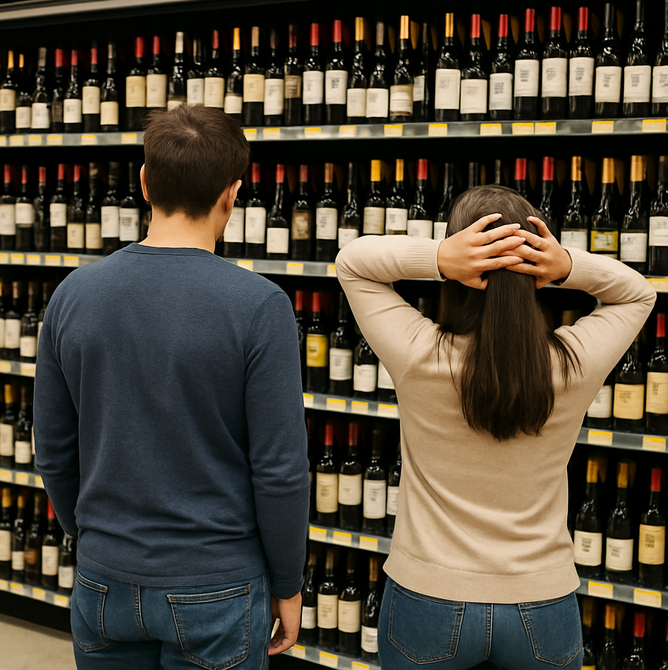
Wine has an unusual problem: there has never been more information available to help us choose a bottle—and yet choosing one can still be remarkably difficult.
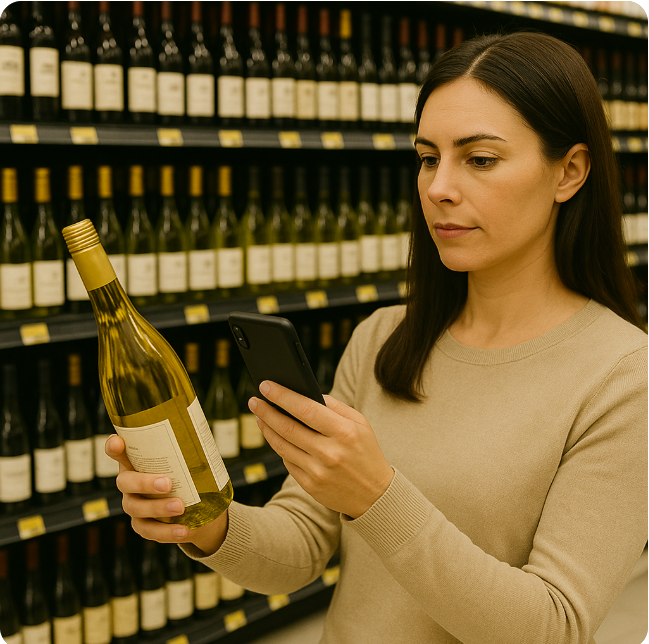
We have professional ratings, crowd-sourced reviews, tasting notes, scores, awards, vintage charts and recommendations from friends. Scan a bottle with an app and you may instantly discover that 8,742 people thought it was terrific.
Useful information.
But it leaves out one rather important person.
You.
A wine critic can tell you whether a wine is exceptionally well made. Thousands of consumers can tell you whether they liked it. A sommelier can explain why it is interesting.
None of them can tell you with certainty whether you will love it.
And that distinction is the starting point for BottleCru.
“Great wine” is personal
Imagine two highly rated Cabernet Sauvignons.
One is powerful, ripe, concentrated and oaky. The other is more restrained, savory, earthy and elegant.
Both may be excellent wines. Both may receive 94 points. And you might love one and leave half a glass of the other.
So what did the 94 points actually tell you?
They told you something important about quality. They didn’t necessarily tell you anything about compatibility with your palate.
BottleCru believes those are two different questions.
Is this a good wine?
And:
Is this a good wine for me?
Traditional wine ratings are much better at answering the first than the second.
Start with the person, not the bottle
BottleCru turns the process around.
Instead of beginning with wines and asking which ones are most highly regarded, it begins by learning something about your palate.
The BottleCru Palate Profile identifies characteristics you tend to enjoy and connects those preferences with wine styles.
You might discover that your preferences lean toward rich and bold reds, lighter and elegant reds, aromatic and crisp whites, or rich and round whites.
That tells us considerably more than simply saying, “I like red wine.”
Even saying “I like Cabernet Sauvignon” doesn’t quite get there. Cabernet can be made in dramatically different styles depending on climate, region, ripeness, winemaking and aging.
The grape matters.
But style gets us closer to what is actually in your glass—and whether you are likely to enjoy it.
Your palate doesn’t need a wine education
There is another benefit to starting with you.
You don’t have to become a wine expert.
Wine has accumulated several thousand years of terminology, traditions and rules. They’re fascinating if you want to learn them. But you shouldn’t need the equivalent of a minor degree in enology to order dinner.
BottleCru can handle the complexity behind the scenes.
You handle the enjoyable part.
Taste the wine.
Did you love it? Like it? Would you buy it again?
Those reactions are valuable information because your tasting history can continue refining what BottleCru understands about your preferences.
In other words, the person who ultimately decides whether a wine is good for you isn’t a critic, an algorithm, a sommelier or 8,742 strangers with smartphones.
It’s you.
BottleCru simply gets better at listening.
And that leads to the next question.
If BottleCru understands your palate, how does it take the thousands of different wines in the world and determine which ones are likely to fit it?
The answer is the concept that sits at the center of BottleCru:
Wine style.